Monday, November 11th, 2019
As we enter the second week of November, I would like to inform all who have stumbled across this blogpost to acknowledge how impactful November is to the Diabetes community. November is Diabetes awarness month and this coming Thursday, Nov. 14th, is National Diabetes Day. So to kick off the week I would like to give an insight to how this disease has not only changed me, but is changing the way of advocacy.
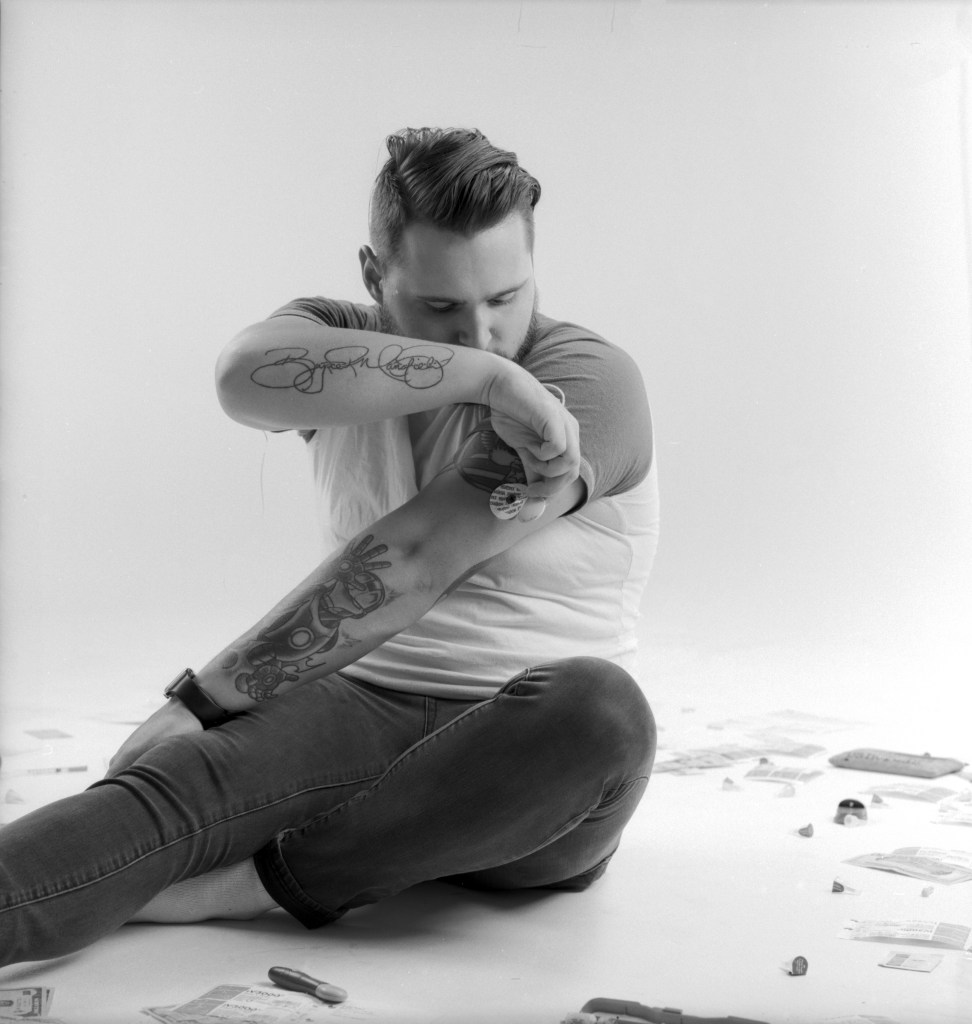
Afterglow
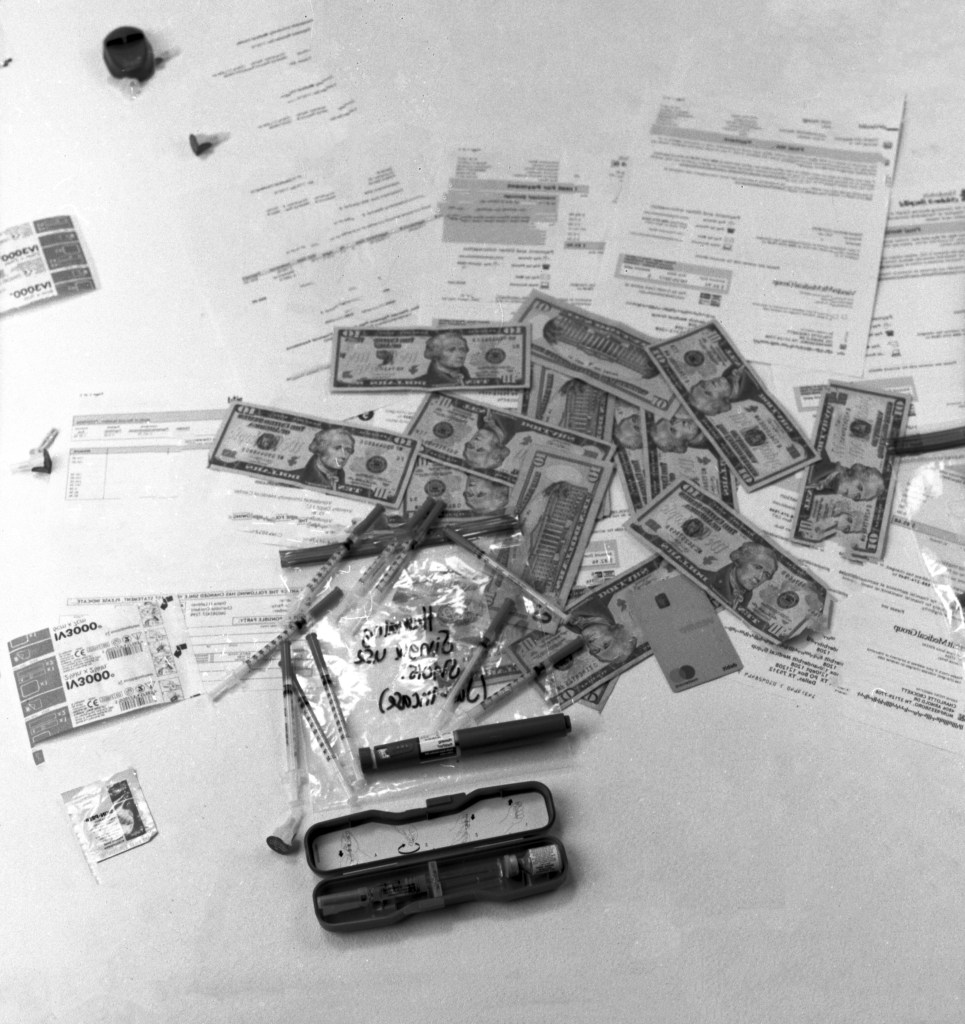
The image above is my good friend and local phtographer, Cody Uhls. For one of the assignments this month, we had to create in our image what America means to us. I’ve had this idea of capturing the life of a diabetic stirring for a while now, and I plan to expand with the idea for my senior show next fall, so I automatically knew what I wanted to shoot for. I wanted to capture the essence of the financial and physical burden that comes with having a chronic disease.
Backstory
A little backstory, if you can not tell by now, I am a Type 1 Diabetic (not to be confused with Type 2. I am insulin DEPENDENT, not insulin RESISTANT.) I was diagnosed at the age of five back in 2003, so I’ve had my fare share of glucoastered days. One of the biggest misconceptions that comes along with this disease is that I ate too much sugar or that I was not eating the right foods, but that’s not the case at all. Type 1 is an auto immune disease, meaning my immune system decided one day to attack my beta cells in my pancreas, the cells responbible for creating the hormone, insulin. Once my immune system had weakened and killed off enough of the beta cells, my body began to shut down in a state of diabetic ketoacidosis. Luckily though, I was not admitted into DKA, but I checked into the hospital with a glucose reading of 1,059 (to put that into perspective, a normal, healthy range for me is between 70-150. A non-diabetic healthy range is 70-100). The rest of my life would now be a never ending cycle of checking, poking, carb counting, and the highs and lows that accopany my now forever life partner.
2016 and onward
At the age of 18, going into my 19th year, I started my first year at university. The first week of school also brought a week in the hospital with me being registered into DKA. It was not a fun labor day weekend, I will tell you that. But how could this happen? A month prior I had switched over from injections to the pump, an easier, less poking and stabbing and now some stability, or so I thought. The pump was a wonderful change, but with it brought my continuous glucose monitor (or CGM) waking me at all hours of the night anytime it sensed a spike or drop in my glucose, and it would not turn off until I woke up to fix the issue. Non-diabetics don’t have to worry about rises or droppings of their glucose, your pancreas and liver do that for you. The day before my hospitalization, I had to change my site, which is supposed to be done every three days. I changed it once, went to eat, and my site fell off of my leg. Weird, I thought, so I changed it again. An hour later while swinning, it falls off of me again. The third time it stays on, but I begin to feel extremly thirsty (a sign of spiked bloog sugar). No matter how much water I would drink, I still had the feeling of an unquinchable thirst. The next morning I am greeted by multiple trips to the bathroom throwing up, until the point where I couldn’t even keep water down. That night I was taken to the hospital where it was confirmed I was going into DKA. The rest of the night was a blur to me, I kept waking in and out of consciousness, but from what I gathered from other people telling me, I was surrounded by 8-9 doctors all frantically trying to find a vein to insert fluids in me. Aparently I was so dehydrayed my veins were collapsing, so when the doctors found a second vein, they squeezed the IV bag and it ended up bursting my vein. I remember screaming, a lot. The next thing I remember is waking up the next morning in a new room, and both of my eyes were extremley swollen, it hurt to blink. I would find out two days later that both of my eyes had went bloodshot the previous night, this was just the after effects of it. The cause of all of this, you may be wondering? My site change of my pump had kinked tubbing underneath my skin, causing a blockage of insulin from getting in my system. This happened all within 18 hours.
I tell you this story of mine because I am one of the few lucky ones. Because this has only happened to me once in my 16 years of being a diabetic. Others like me are not so lucky.
Now What?
When I turned 19, I got a letter in the mail stating that my insurance was lapsing. If you know anything about insulin, you know just how expensive my life was about to get. I thought, “how could this happen? I make less than $9,000 a year, how can a freshman in college even afford my $2,400 insulin every 6 weeks?” Many told me, asked me, were even bewildered by the fact that, “What about your parents!”. Yeah, what ABOUT my deceased father and my uninsured mother. After that, people really don’t know how to respond. I bring this up because I am one of the many, 1 of 4 diabetics who are uninsured. And it is very expensive to be sick in corporate America.
#Insulin4All
November 14th, 1891, one of the main inventors of the drug that keeps me, along with millions of others alive, was born, and 31 years later he would help contribute to one of the world’s largest medical discoveries: the discovery of insulin. For people like me (as a matter of fact, everyone reading this) needs this hormone to sustain life. Without insulin, the sugar in the bloodstream causes elevated glucose levels which can cause an array of side effects such as: dizziness, irritability, extreme thirst and hunger, nausea, vomiting, blurred vision or vision loss, and in less than 24 hours can lead to diabetic ketoacidosis, or even death. Being a diabetic is a full-time job. There are no days off, there is no holiday pay or sick days. It is a 24/7 continuous monitoring of glucose and carb counting and making corrections and calculations. I fight this fight so often and vigorously because my life truly depends on it, because the very cost of the drug invented 97 years ago and sold for $3 is now sold for +$400 a vial, and that is criminal. To force U.S. citizens to pay or die, that is not the American dream. It is a death sentence. I advocate the #Insulin4All movement because people like me shouldn’t die because of the financial burden this disease brings, there are already enough complications that come along with it. Being able to afford our livelihood shouldn’t be one of them. If you’ve made it this far, thank you for your support.
 Capture it; Remember it